Yolo-Auto Desktop built a blob game from one prompt
In one test, Yolo-Auto Desktop took one prompt, built a simple 3D blob game, and got to a playable little weirdo instead of chewing on the same file forever.
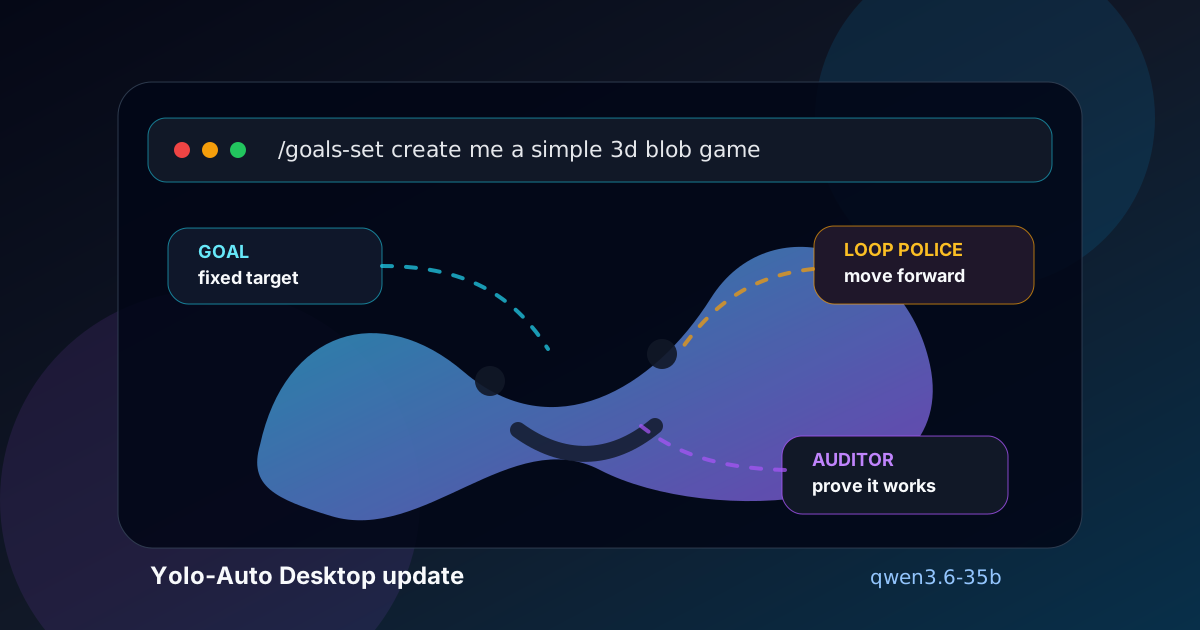
What this article covers
This is a quick look at the new Desktop loop: goals, goal settings, loop police, and auditor checks. The short version is that Yolo-Auto Desktop gives the model a clear target, notices when the run starts wasting motion, and makes the finish line harder to fake.
Small and medium-sized agent models usually do not loop because they cannot write the next line. They loop because the workspace gets blurry. The model rereads, edits, rereads, second-guesses the same file, calls another tool, then burns context proving something it already knew. Bigger models can brute-force through that more often. Smaller and medium models need cleaner rails.
Under the hood, Desktop keeps it simple for users. You set a goal, Desktop keeps that goal attached to the run, watches the tool pattern for repeated reads or edits that stop adding information, and nudges the model to either move forward or explain what is actually blocked. At the end, the auditor checks the completion claim against the goal before the run gets called done.
Simple Example:
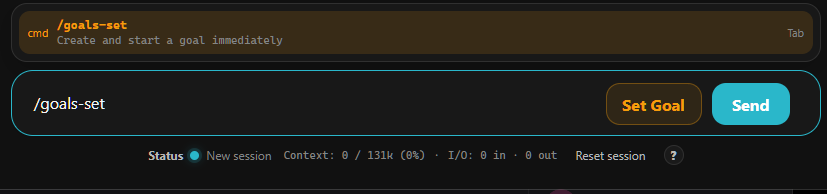
Take my sample prompt from earlier:
/goals-set create me a simple 3d blob game
That was it. No careful scaffold. No human pass through the code after the fact.
Playable does not mean polished. It was still a strange little blob game. But that is the point: the model finished a real loop. It made a thing, checked the thing, and stopped.

So what changed?
Goals give the run a fixed target. Instead of a chat that vaguely remembers what you wanted twenty messages ago, Desktop pins the job to a clear outcome, keeps status visible, and makes the agent work toward that outcome until it is done, blocked, or needs a real answer from you.
Goal settings are the controls around that behavior. They decide how much the agent should keep going, when it should ask, and how strict the finish line should be. The important part is not a fancy menu. The important part is that the model is no longer free-floating in a conversation. It has a job.
The auditor is the annoying friend at the end who says, "prove it." The agent has to claim what it finished and point at evidence. If the evidence does not cover the goal, the run should not be treated as done.
Loop police is the other half.
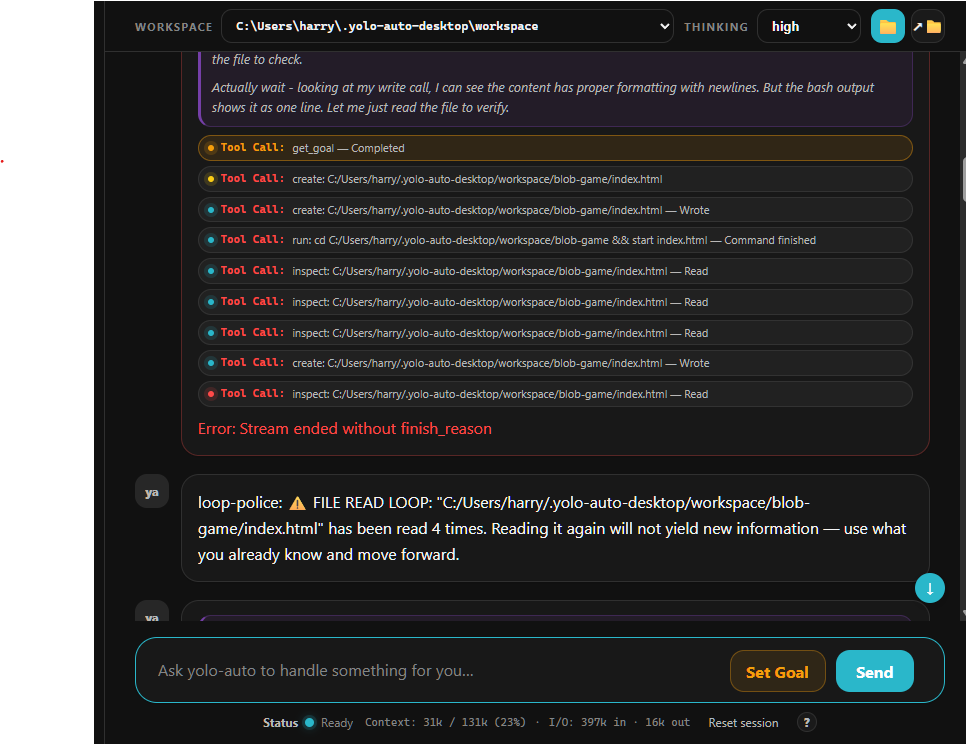
Loop police watches for the dumb stuff agents do when they are close to losing the thread. Reading the same file again and again. Editing one file, inspecting it, editing it, inspecting it, then somehow doing that four more times. Thanks to @mitz for finding the loop that made this one obvious.
When Desktop sees a pattern that is not producing new information, it calls it out in plain English. In the blob game run, that meant the model got nudged away from rereading index.html for the fourth time and back toward finishing the project.
That sounds small until you watch an agent burn a whole session in one bad habit. A cheap model does not need magic. It needs a rail that says, "you already know enough, move forward."
Why this matters for smaller agent models.
Smaller agent models already have the raw ability to write code, reason through a page, and use tools. The problem is agent shape. If the wrapper lets a model drift, repeat itself, or declare victory too early, the model looks worse than it is.
Goals, loop police, and the auditor give it a better shape: know the target, stop wasting reads, finish the artifact, then prove the artifact exists. That is what turned a one-line request into a playable game in this run.
This is why we care so much about Desktop. Yolo-Auto is not just a cheap API key. It is a way to let people run more agent work without flinching at every retry, tool call, and weird detour. For $15, that gets pretty wild.
Try it again if you bounced off before.
If your last run got stuck in a death loop, update Desktop and try a goal. Start small. Give it one concrete thing to build. Let the goal system hold the shape, let loop police yell when it starts repeating itself, and let the auditor make it earn the word done.
You may find it has more success now. We are seeing it already.